

Introducing the Autism-Friendly AI Revolution
Business is no longer entrenched in social exclusivity
Below, you can see I just published a video: The Autism-Friendly AI Revolution in which I suggest that in the Autism-Friendly AI Revolution the world of business is no longer entrenched in social exclusivity.
Yesterday I published How To Start Your Own Business With AI in which I explained how today anyone with strong autistic perception can start their own business with a phone, a computer, and the assistance of AI for under $75.
In 1996, I published Autism and the Crisis of Meaning. I presented a simple model for understanding autistic perception based on my PhD dissertation at Indiana University. Basically, I claimed that there are three modes of logical inference: induction, deduction, and abduction. Social perception is highly inductive perception, while autistic perception is highly deductive perception.
In that book I coined the term Slight Autism referring to people who are noticeably but not diagnoseably autistic. I claimed that it entailed a whole lot more people than anyone realized. For example, almost all college professors are slightly autistic. That’s why they become college professors. That way they can hideout from the social world in the ivory tower and flip the game of social exclusivity with their own game, which is essentially revenge of the nerds.
But Autism and the Crisis of Meaning was a horrible title. People thought I was referring to autism as a crisis of meaning. I meant exactly the opposite: the social world is experiencing a huge crisis of meaning, no one really understands the logic of meaning, mind, or self, and that’s why no one has been able to understand the logic of autistic perception.
Immediately, my sociology colleagues denounced and derided me across the board. They said, “We don’t do that, do we?” meaning psychologists study autism, not sociologists. I had earned my degree in social psychology from the sociology dept. at Indiana University, a Top 5 department, yet they insisted on treating me like a know-it-all who had gotten out of his lane, a mental case who was really just the dumbest person in the room.
One day, I was sitting in my office at Cal State San Marcos, the site of my first and last full-time professorship in academics after receiving my PhD, as well as pre-doctoral and post-doctoral fellowships at IU. The phone rang and it was Bernard Rimland, the father of the modern scientific study of autism. He invited me to his Autism Research Institute in San Diego, showed me around, and took me to lunch. He told me he liked my work and to keep going. Bernie was good to me.
Today there is a new subfield in sociology: the sociology of autism and neurodivergence (See, Jennifer Leveto: 2018 https://www.researchgate.net/publication/328223671_Toward_a_sociology_of_autism_and_neurodiversity.) Today, most of the people publishing in that subfield cite Autism and the Crisis of Meaning because that book started the subfield.
Exhausted from continually being treated like a mental case who was the dumbest person in the room, I left academics in 1999, one year before I was supposed to go up for tenure. Why would I want to stay there for the rest of my life being treated like a moron who was a mental case for only $40,000 a year? I may be crazy, but I’m not stupid.
Then in 2004, I published How to Understand Autism - The Easy Way. Bernard Rimland gave me a wonderful testimonial for the back cover of that book. It was published by Jessica Kingsley, Pub. of London. In that book I introduced the concept of being Autism-Friendly and suggested that all schools, businesses, and public offices should become Autism-Friendly. I defined this as simply being willing to give 5 extra minutes of patience to people with autism and their families, whenever a person with strong autistic perception was having a rough time. Within 1 year of publication, every school in the U.K. had declared itself to be Autism-Friendly.
I was excited and set up the website Autism-Friendly.com. But I eventually grew weary of being continually lambasted and treated like a know-it-all for forwarding an asset approach to autism instead of the traditional deficit approach. In both books I’d said that autism is not a mental illness, it’s not something you “have,” it’s just a different kind of meaningful perception. It has its strengths and its positive attributes, just like social perception. Sure, it has its challenges, but that doesn’t make it any different or inferior to social perception. People with social perception have their fair share of problems and challenges, too, you know.
But I was continually lambasted for minimizing the challenges faced by parents of children with autism. Finally, I got tired of being treated like a fool, I shut down the website, and I walked away from the field of autism. In those days the terms neurodiversity and neurodivergence didn’t even exist.
Back in 2006, I had started PhD Business Plan, put up my website, and became a self-employed business plan writer. Working at home and making a living was the best thing that ever happened to me. The social exclusivity of the workplace had always been a bummer for me. After a while I began subcontracting with business plan companies online. Since 2006, I’ve written 2,000+ business plans.
Not long ago I figured out how to automate my plans with AI and cut my production time by 65%. So, I started My AI Business Plan here on Substack and decided to pass on the savings. Ordinarily, you need to have a business plan to get a small business loan at the bank, and they usually cost around $2,000. But now, ladies and gentlemen, you can get yours here today for the smart price of only $492.
Here on Substack, I soon found myself gratified and grateful to find a number of people discussing the plight of having strong autistic perception, often comingled with ADHD. I was particularly impressed by Nick Dean 3.0 who wrote insightfully about the perception and the challenges of being a person with autism and ADHD. In my opinion, Nick Dean 3.0 is presenting the most trustworthy description of Autistic Burnout that I have seen. He is developing a profound understanding of the concept of Autistic Burnout that’s coming straight from the horse’s mouth, so to speak (see, Nick Dean 3.0 | Substack). In other words, it’s not another installment on autism as a mental illness brought to you by the friendly neighborhood psych white coats.
To hear it from Nick Dean 3.0, you can begin to understand how anyone with strong autistic perception would be driven crazy living in the ham-handed world of social exclusivity. I will hasten to add that true multiculturalism and true inclusivity will one day include cultures of autism, families of autism, and people with strong autistic perception. But I’m not going to hold my breath. I’m a compassionate person who understands that social people need all the help they can get and we need to be patient with them.
Nick Dean 3.0 influenced me and inspired me. I found myself wanting to tell everyone that My AI Business Plan was an Autism-Friendly business and that it was pioneering an Autism-Friendly Business Model.
It hit me that Nick 3.0 and all the other people writing about autism and ADHD here on Substack had brought me out of my self-imposed exile. Now I’m somewhat back and feeling somewhat vindicated, and I’m happy to say that the AI revolution is ensuring that people with autism are no longer entrenched in the ham-handed social exclusivity of the world of business.
Thanks for being there, Nick Dean 3.0.
I’ll make myself stop now because this is going long. More some other time.
Peace and Love~
-Alex
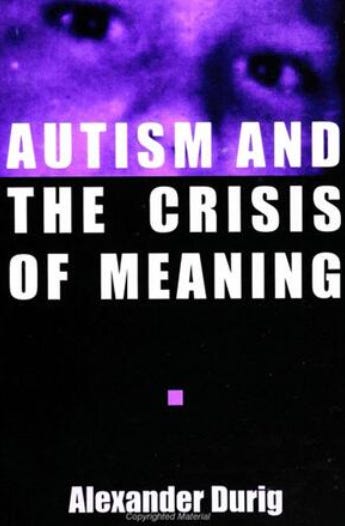
Autism and the Crisis of Meaning: Durig, Alexander: 9780791428146: Amazon.com: Books
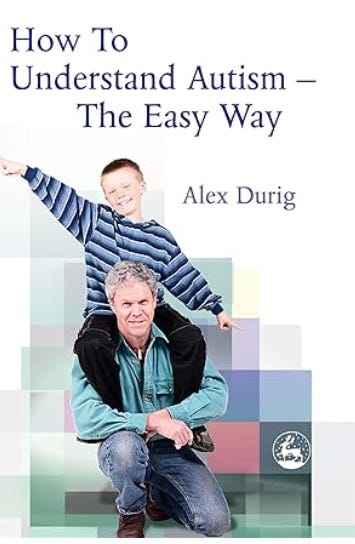
How to Understand Autism - The Easy Way: Durig, Alex: 9781843107910: Amazon.com: Books
Video: The Autism-Friendly AI Revolution
In the Autism-Friendly AI Revolution the world of business is no longer entrenched in social exclusivity. Today, anyone with strong autistic perception can start their own business with a phone, a computer, and the assistance of AI.